Creatine For Muscle Building: The Science of Why & How to Use It:
Creatine is a naturally occurring substance within all mammals. It is produced by our livers & kidneys and is stored mostly in skeletal muscle. It is estimated that most of us produce about 1 gram per day naturally.
The more active a person is, the more creatine they will naturally produce, and vice versa. Those of us who eat meat also gain additional creatine from our diets as animals store it in their muscles too.
Important side note:
More creatine will be found in “wild”, game meat and in grass fed organically raised meat than in meat raised in the standard way and fed grains.
Creatine has literally been in humans for over 6 million years, but we didn’t discover it until 1832. It was identified when extracted from skeletal muscle and named creatine because in Greek that literally means muscle.
The use of creatine as a supplement did not become popular until almost 100 years later when a study found ingestion of creatine increased the amount of creatine in skeletal muscle. Shortly thereafter, other studies found ingestion of creatine could increase muscle size.
Still no creatine supplement was created until about 1970 when a synthetic form was mastered by scientists.
In the early 1990’s creatine became a “thing” and athletes all over were shortly using it and seeing the benefits. Creatine exploded on the market and still remains one of the most used and safest sports supplements.
How Creatine Works:
As a doctor and health & fitness expert I get lots of questions about supplements; does creatine build muscle? Is creatine necessary? How much does creatine help? And so on….
By the end of this section you will clearly see the answers.
Creatine is very simple to explain. Creatine gives YOU more energy! Well, it’s a little more complex than that, but that really is the gist of it.
Creatine hangs out mostly in skeletal muscle; there is a bit extra that will be in the blood and some in the brain, but for the most part, think skeletal muscle.
Skeletal muscles are called “skeletal” muscles because they attach to the skeleton, or bones of the body and move the body through space allowing us to do all the fun things we do in life.
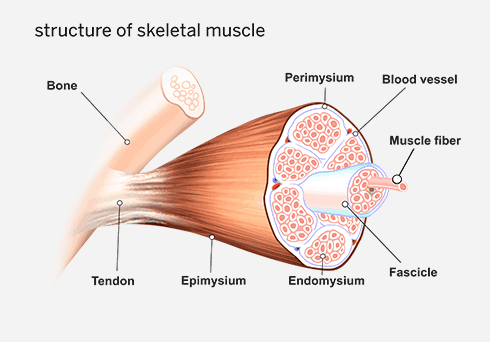
In addition, skeletal muscles are the ones we go to the gym to pump up! Usually just pecs and biceps…..kidding….Hopefully.
Turns out all this moving takes a bunch of energy and the muscles have a currency called Adenosine Triphosphate (ATP) that is used to make movement happen. ATP can be produced in one of three ways; all have fancy names, stick with me for a second while we chat science….
System 1; Aerobic System or Krebs Cycle
This system produces the largest amount of ATP, but takes the longest to do so, and requires oxygen. As the name implies, this system is used for “aerobic” based work, meaning lasting longer than 90-120 seconds and not maximal effort, think jogging or walking.
System 2; Glycolysis
This system is fast way to produce ATP, but it produces less and is mostly used for near maximal efforts lasting between 30-90 seconds. This is where weight lifting can fall, as well faster pace runs (sprints) or sports like hockey, all out for 60 seconds then rest.
System 3; The creatine-phosphate system (CP System)
This system is the fastest route to ATP and is used in all out, short bursts lasting less than 30 seconds (Robergs & Roberts 1997). It is here that all power moves in weight lifting, most sets with fewer than 10 reps and all out sprints will fall into.
Quick re-cap of that; 3 ways to make ATP. Creatine-Phosphate system is the one we really care about here.
More boring science to ensue…
When ATP is used for energy it becomes adenosine diphosphate (ADP). Creatine will attach itself to a phosphate creating a creatine-phosphate (CP) molecule and drag it over to the ADP that has been split. Creatine hands off the Phosphate to ADP and BOOM! You have ATP again!
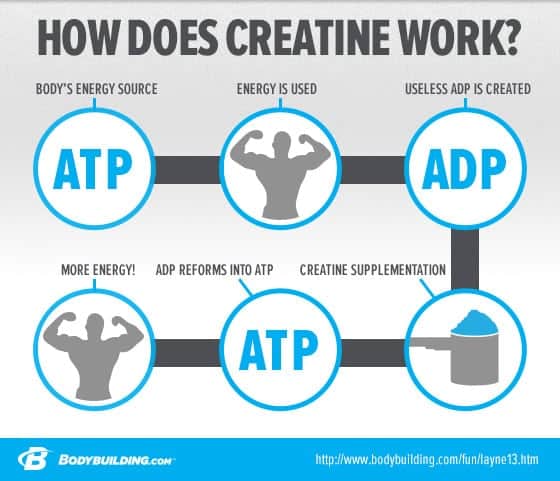
This happens very quick, and as you guessed, the more creatine you have hanging out in your muscles the faster you can make this happen and you can train harder & longer.
Ever get that burning sensation in the gym and feel like you need to stop pushing? Creatine to the rescue!
That burning sensation is a build-up of byproducts from muscular contraction.
And guess what; the more creatine hanging around in your muscles, the less byproducts you have hanging around to cause that burning (McConnel, et. al). This in itself allows us to push a little harder and longer too!
Here’s the bottom line takeaway from all the science mambo-jumbo…..
Creatine helps you eek out a few extra reps, can take milliseconds off a sprint or give you that final little push.
 health_fitness review